





| 题目 | Low-frequency magnetic fields from power lines and wiring affect healt… | ||||
|---|---|---|---|---|---|
| 早会 | 5 | 制定日期 | 2026-11-12 | ||
|
The magnetic field around a power line or a lamp cord is a sixty-hertz field, meaning it rises and falls sixty times a second, matching the alternating current that carries electricity in the United States. It is a near-field effect of current flow, not a form of radiation that travels away like radio waves. The field is strongest close to the conductor and drops off quickly with distance.
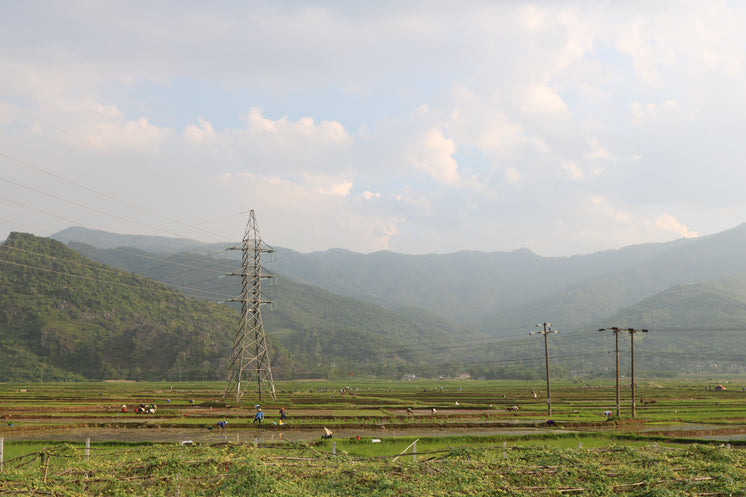 It passes through walls and most materials without much weakening, so a field from wiring inside a wall can be measured in the room next to it. Field strength depends on how much current is flowing, not on the voltage alone, which is why a heavily loaded cable can produce a stronger field than a high-voltage line far away. Exposure is commonly reported in milligauss in the United States and in microtesla in much of the scientific literature. One microtesla equals ten milligauss, so a reading of two milligauss is zero point two microtesla. Typical background levels inside homes are small, often around one milligauss or less away from appliances and wiring. Appliances can produce much higher readings at close range, but those fall off sharply within a foot or two. Under large transmission lines, readings at ground level vary widely with load and design and are usually well below the levels found right next to household appliances. Public exposure limits differ by country and by what they are meant to protect against. The limits most often cited are set to prevent immediate effects, such as induced currents in the body that could affect nerves or the heart, and they sit far above ordinary residential levels. The International Commission on Non-Ionizing Radiation Protection publishes guidelines of this kind, and some countries adopt them while others set stricter national limits. In the United States there is no single federal standard for sixty-hertz magnetic fields from power lines. The Federal Communications Commission has authority over radio-frequency exposure, not power-frequency fields, and questions about local line fields generally belong with the utility that owns the equipment. On health, the published evidence is mixed and has been reviewed repeatedly. Some epidemiological studies have reported weak associations between prolonged exposure to higher-than-usual residential fields and childhood leukemia, but the associations are small, inconsistent across studies, and not supported by laboratory work showing a mechanism. Major reviews, including those by the World Health Organization and national health agencies, have generally classified power-frequency magnetic fields as possibly carcinogenic based on that limited evidence, while concluding that the evidence is not strong enough to establish a causal link. That is not a clean bill of health, and it is not proof of harm. It reflects genuine uncertainty. Practical questions about a specific home or line are best directed to the utility, which can measure fields and explain its equipment, or to local officials who handle siting. If you are worried about symptoms you attribute to exposure, that conversation belongs with a doctor. If you are considering legal action over a line or a property, consult a lawyer. Devices marketed to block or neutralize low-frequency magnetic fields explained fields have not been shown to reduce exposure or protect health, and the fields from ordinary wiring are not something a sticker or shield can remove. There is a fuller write-up at low-frequency magnetic fields explained. |
|||||
댓글목록
Aurelio Dyason님의 글에 아직 댓글이 없어요..ㅠㅠ
댓글은 글쓴이에게는 큰 힘이 된답니다..